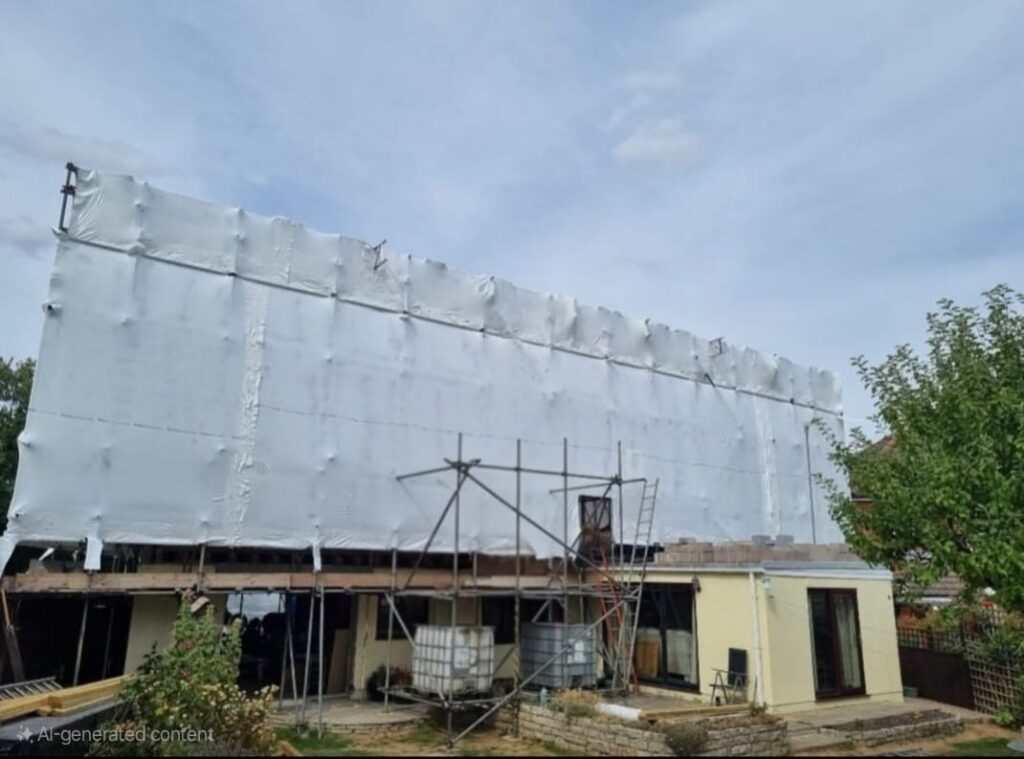
- Waterproof scaffold enclosure for exposed projects
- Custom branding, marketing & building visualisations available
- Bungee cords supplied as standard
Scaffolding Shrink Wrap
Scaffolding Shrink Wrap Services in Dorset
Scaffolding shrink wrap creates a tightly fitted, waterproof temporary enclosure around scaffolded buildings and working areas. Once the specialist material has been installed and heat-shrunk, it contracts around the structure to form a taut protective covering that can help shield working areas and exposed sections of the building from rain and changing weather conditions.
For projects where a reinforced sheet system is more appropriate, we also offer Monarflex scaffolding sheeting. Monarflex provides a versatile alternative where a flexible sheeted enclosure is preferred, while shrink wrap is particularly well suited to projects requiring a tight, closely fitted finish.
As well as providing practical weather protection and containment, scaffold shrink wrap can become a highly visible marketing feature. The material can be custom branded with company logos, advertising messages, development information and other promotional graphics, making productive use of large scaffold elevations while work is taking place.
For construction, redevelopment and refurbishment projects, the covering can even display a printed visualisation showing how the building is expected to look when the work is complete. This can dramatically improve the appearance of a scaffolded site and is particularly effective on prominent developments, commercial buildings, hotels, retail premises and other properties facing busy public areas.
Bungee cords are supplied as standard, providing a practical fixing solution as part of the scaffold enclosure installation.
Shrink wrap can be particularly valuable on roofing, refurbishment, façade, painting and building projects where greater weather screening, dust containment, privacy or visual separation is required. It can be installed around individual elevations, sections of scaffold or more extensive temporary enclosures depending on the needs of the project.
Unlike conventional loose coverings, shrink wrap is tensioned around the scaffold using heat. This produces a much closer fit around corners, rooflines, working lifts and irregular scaffold arrangements, helping create a clean and uniform external appearance.
The covering can also help contain dust and lightweight debris generated during external works. This can be particularly useful where scaffolding is positioned close to neighbouring properties, pedestrian areas, occupied buildings or other parts of an active site.
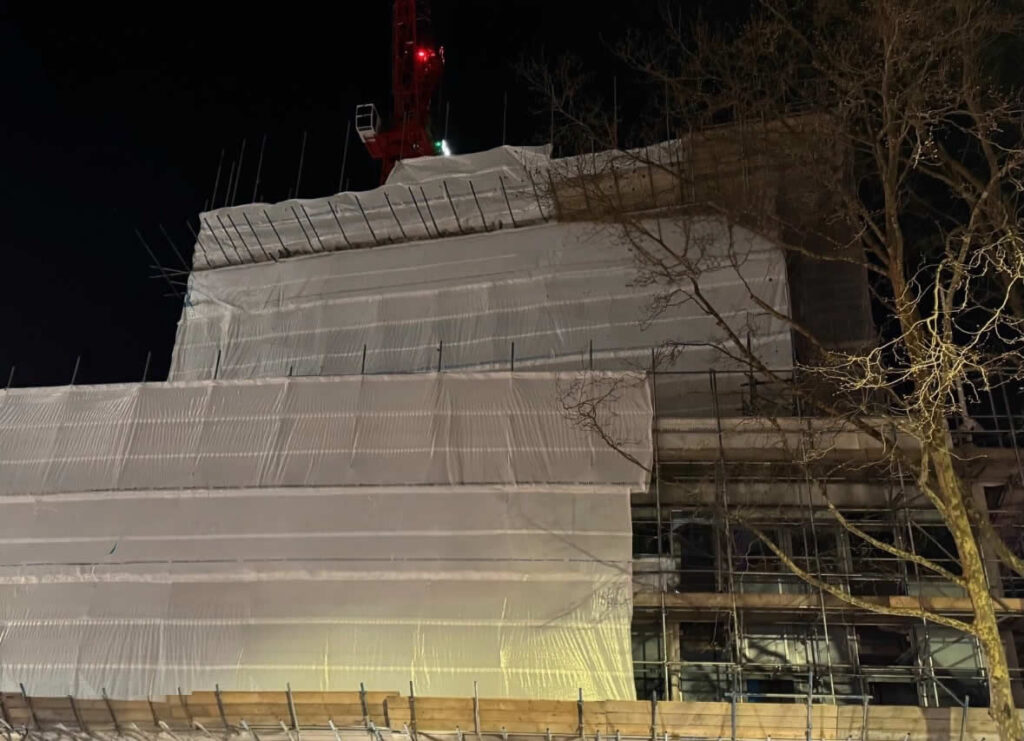
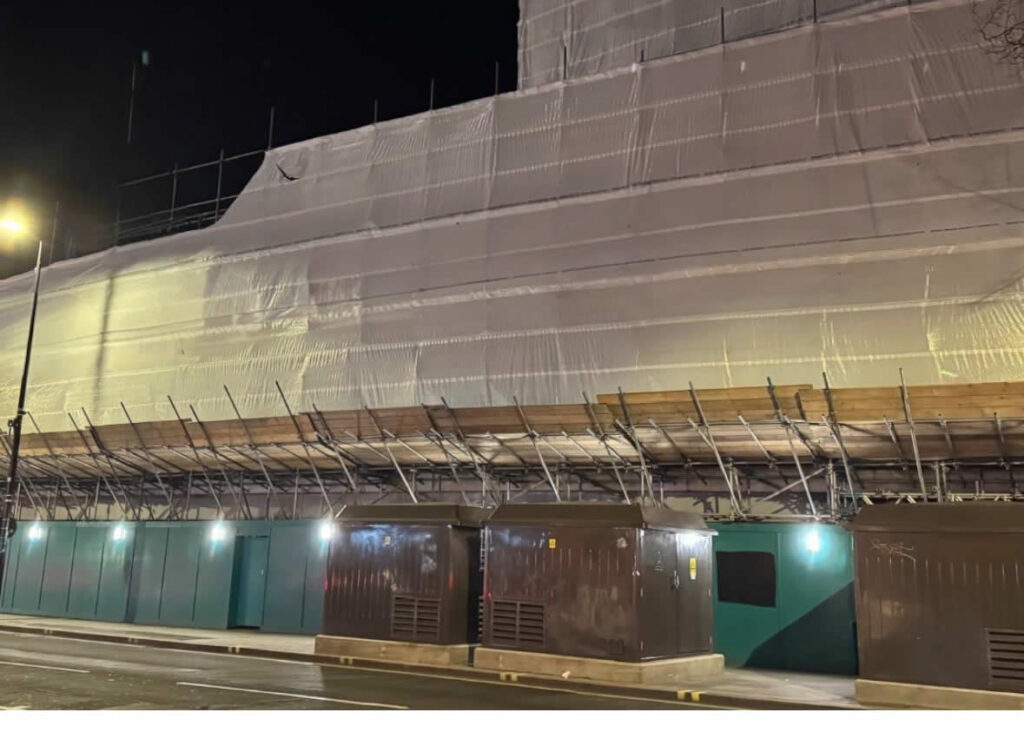
How Scaffold Shrink Wrap Is Installed
Shrink wrapping starts with the scaffold rather than the plastic covering. Before installation, the scaffold layout and intended enclosure need to be considered so that the finished system can accommodate working lifts, access points, corners, rooflines and other changes in the structure.
Sections of specialist shrink wrap material are fitted across the required parts of the scaffold and joined to form the enclosure. Controlled heat is then applied to the material, causing it to contract and tighten around the scaffold framework.
This tensioned finish is one of the main characteristics of scaffolding shrink wrap. Rather than leaving large areas of loose material, the covering follows the shape of the temporary structure much more closely, producing a neat and relatively uniform surface.
Bungee cords are supplied as standard as part of the enclosure system, providing secure fixing points where required and helping the covering work effectively with the scaffold arrangement.
The installation can be adapted around different scaffold configurations. Access doors, openings and working areas can be incorporated so operatives can continue to reach the required parts of the building while the surrounding elevations remain covered.
Individual sections can also be altered during the project if access requirements change. This may be useful where materials need to be brought onto the scaffold, new work areas are opened or sections of the temporary structure are progressively modified.
Because wrapping the scaffold increases the surface area presented to the wind, the enclosure has to be considered as part of the overall temporary works arrangement. Scaffold ties, bracing, fixings and the level of site exposure must all be suitable for the proposed covering.
The completed shrink wrap should then be monitored throughout the hire period. Tears, alterations, severe weather or changes to the scaffold can affect the enclosure and should be dealt with where necessary.
Projects That Benefit From Scaffolding Shrink Wrap
Shrink wrap can be used where a scaffolded project would benefit from a more defined and enclosed work area. Coverage can be tailored around individual elevations, specific work zones or a larger scaffold structure according to the type and duration of the project.
Roofing works can expose parts of a property while coverings, flashings, chimneys and structural elements are repaired. Waterproof shrink wrap can provide additional protection around the scaffolded working area while these works are completed.
External surface preparation, painting and certain spraying activities can benefit from having a more enclosed perimeter, helping to separate the work area and reduce the uncontrolled spread of dust or lightweight material.
Repointing, brick repairs, stone restoration and façade refurbishment can produce dust and debris. A wrapped scaffold provides another barrier around the active working elevation.
On retail, commercial and prominent public-facing buildings, custom printed shrink wrap can screen construction activity while creating valuable space for company branding, marketing or a visualisation of the finished development.
For projects lasting several weeks or months, shrink wrap can create a more consistent enclosed working environment across different stages of construction, maintenance or refurbishment.
Full scaffold encapsulation is not necessary for every project. In many situations, particular elevations or working zones can be wrapped while other parts of the scaffold remain open for ventilation, loading or access.
Planning Safe Shrink Wrapped Scaffolding
Shrink wrapping can significantly alter the forces acting upon a scaffold. Once a structure is covered, wind has a much larger continuous surface to act against instead of passing relatively freely through open scaffold tubes and working lifts.
For this reason, the intended enclosure should be considered during scaffold planning rather than simply added afterwards. Scaffold height, dimensions, shape, tie arrangement, surrounding buildings and anticipated weather exposure can all influence the requirements.
Our team considers the proposed shrink wrap coverage when assessing the scaffold arrangement. Where additional design considerations are required, these can be incorporated into the temporary works planning before the enclosure is installed.
The practical requirements of the trades using the scaffold also remain important. Operatives need suitable access between levels and working areas, while loading points, materials and entry routes must remain functional once the enclosure has been fitted.
Any later alterations to the scaffold also need to take the covering into account. Removing components, changing access points or opening sections of the enclosure can affect the way the scaffold and shrink wrap behave as a complete system.
Strong winds, accidental damage and normal site activity can also affect the covering over time. Regular scaffolding inspections provide an opportunity to identify changes to the scaffold and visible issues affecting the enclosure while it remains in use.
Protection, Presentation & Scaffold Shrink Wrap
Scaffold shrink wrap does more than create a separated working zone around a building. Its waterproof construction can provide additional protection for exposed working areas while helping contractors continue with external works during periods of unsettled weather.
Shrink wrap can be incorporated alongside different scaffolding systems and temporary access arrangements. The covering follows the scaffold layout, allowing the enclosure to be adapted around the particular shape and requirements of the building.
For highly visible sites, the large surface created by a wrapped scaffold can also be used for marketing. Custom printed coverings can display company branding, development names, promotional campaigns and project information throughout the duration of the works.
Another option is to reproduce an architectural visualisation of the completed building across the scaffold enclosure. Rather than visitors and passers-by seeing a plain temporary covering, the wrapped elevation can give them an impression of how the property will appear once the construction or refurbishment work has finished.
The enclosure can also be divided into separate zones. One elevation may be completely wrapped while another remains open for loading, ventilation or regular access. Sections can then be adapted as the project progresses and different parts of the building become available to the trades.
Where a more flexible reinforced covering is preferable, Monarflex scaffolding sheeting provides an alternative to full shrink wrapping. The most suitable option can depend on the desired level of enclosure, scaffold geometry, weather exposure, duration of the work and how frequently individual areas need to be opened or changed.
By considering these requirements during the scaffold planning stage, 3SC Group Scaffolding can provide a temporary access and enclosure arrangement that combines practical protection with a professional external appearance.
To discuss waterproof scaffolding shrink wrap, custom printed scaffold coverings or temporary enclosure for a domestic or commercial project in Dorset, contact 3SC Group Scaffolding on 01305 590290.