If you’re booking scaffolding for your home, a rental property, or a commercial project, safety and compliance aren’t optional extras. They’re the foundation of whether your job runs smoothly or turns into a stressful mess of delays, complaints, and potential liability. In 2026, expectations around site safety, documentation, training, and accountability are higher than they’ve ever been. Councils, insurers, contractors, and even neighbours are more aware of standards, and poor operators are easier to spot.
You don’t need to be an expert in scaffolding regulations to choose the right company. What you do need is a clear sense of what good looks like, how compliant firms actually operate day to day, and where shortcuts usually appear. This guide walks you through the real-world signs of a safe, professional scaffolding company, how modern compliance works, and what you should expect when you’re paying for a properly run service.
By the end, you’ll know how to assess a scaffolder with confidence, ask the right questions, and avoid the hidden risks that often catch people out.
Why scaffolding safety matters more than ever
Scaffolding is one of the highest-risk elements on a building site. Falls, collapsing structures, falling materials, and public access hazards all carry serious consequences. Even a small domestic scaffold can create risk if it’s poorly installed or badly maintained.
In recent years, enforcement has tightened. Councils monitor pavement licences more actively. Insurers demand stronger evidence of competence. Principal contractors expect full documentation before allowing access. Digital reporting and photographic evidence are now common, which means poor practices are harder to hide.
There’s also a cultural shift. Homeowners and landlords are more aware of their legal responsibilities. If something goes wrong, questions get asked quickly about who installed the scaffold, whether it was compliant, and whether inspections were carried out correctly.
Choosing a safe scaffolding company protects you from disruption, protects the people working at height, and protects members of the public who walk past your property every day.
What safety and compliance really mean in practical terms
Safety and compliance aren’t just about ticking boxes or having certificates in a folder. In real life, they show up in how the scaffold is designed, installed, inspected, adapted, and removed.
A compliant company plans access carefully. They assess load requirements properly. They use the correct components, not whatever happens to be in the yard. They maintain consistent erection standards across all jobs, not just big contracts.
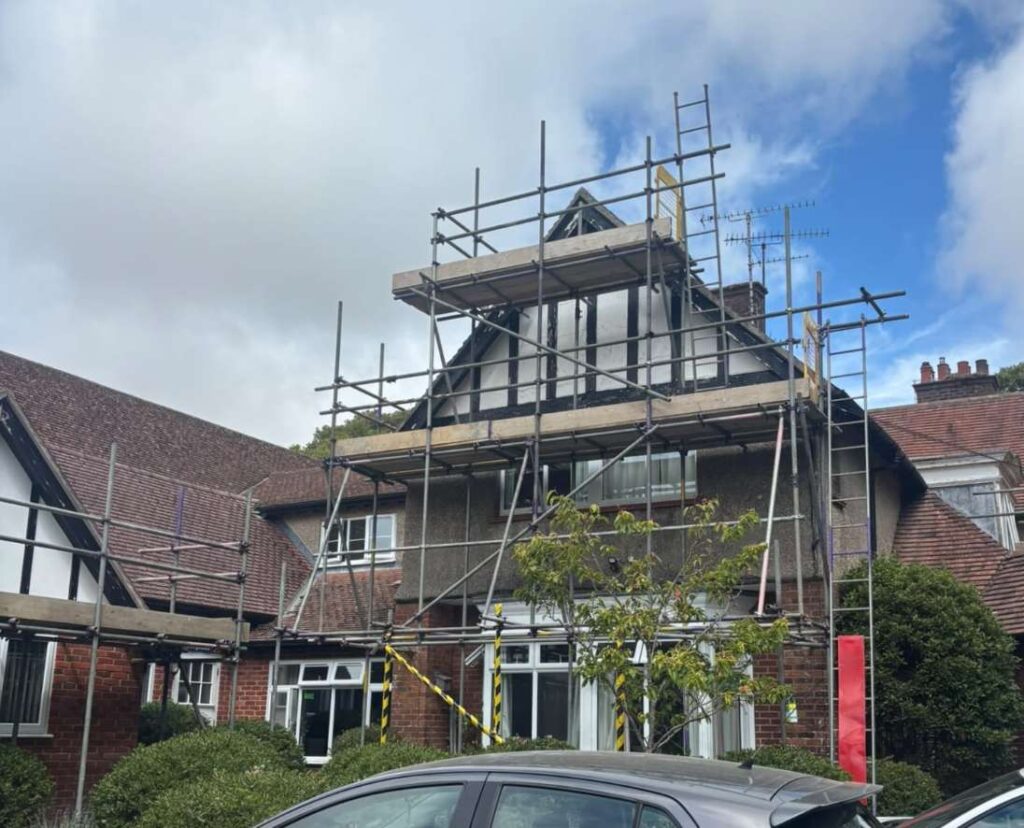
You’ll see safety in the small details. Boards sit flush and secure. Guardrails are continuous. Toe boards are fixed properly. Ties are installed where required, not skipped because they’re inconvenient. Public-facing scaffolds are lit and clearly marked. Walkways remain accessible.
Compliance means the company understands current guidance, follows it consistently, and documents what they do so responsibility is clear if anything is questioned later.
Understanding the current regulatory framework in the UK
In the UK, scaffolding safety sits under a combination of health and safety law, industry guidance, and local authority rules.
The main legal framework comes from the Health and Safety at Work Act and the Work at Height Regulations. These place duties on employers and contractors to plan work safely, provide suitable equipment, and ensure competence.
Industry guidance such as TG20 and SG4 sets practical standards for tube-and-fitting scaffolding and safe working at height. These documents are updated regularly to reflect real-world incidents and best practice.
Local authorities control pavement licences and public highway conditions. These add further layers around lighting, pedestrian access, insurance levels, and installation times.
A compliant scaffolding company understands how these layers interact rather than treating them as separate paperwork exercises.
How competent scaffold design reduces risk before installation
Good safety starts long before a single pole goes up.
A professional scaffolder assesses the site properly. They look at ground conditions, access restrictions, building shape, roof lines, load requirements, and public exposure. They plan where ties will go, how materials will be loaded, and how workers will move safely on the scaffold.
For more complex structures, a design drawing or calculation may be required. This ensures the scaffold can safely carry the intended loads and withstand wind exposure. Even on smaller domestic jobs, experienced scaffolders mentally apply the same logic.
Poor operators often skip this stage. They arrive with a standard configuration and adapt on the fly. That’s where mistakes creep in, shortcuts appear, and structural weaknesses develop.
When design thinking is embedded from the start, erection becomes smoother, safer, and more predictable.
Training and competence in modern scaffolding teams
One of the clearest indicators of a safe company is the quality of its workforce.
Competent scaffolders hold recognised training cards and progress through structured qualification levels. Supervisors understand how to manage teams, identify risks, and enforce consistent standards. New starters are supervised properly rather than left to figure things out themselves.
In 2026, many firms also provide regular refresher training, toolbox talks, and digital learning updates. This keeps teams aligned with changing guidance and emerging risks.
You don’t need to memorise card types or certification schemes. What matters is that the company can clearly explain how their teams are trained, assessed, and supervised. Vague answers usually signal weak internal standards.
The importance of risk assessments and method statements
Risk assessments and method statements are often misunderstood as paperwork exercises, but they serve a practical purpose when used correctly.
A risk assessment identifies hazards specific to your site. That might include narrow pavements, overhead cables, uneven ground, or nearby traffic. A method statement explains how the scaffold will be installed safely given those conditions.
Good companies tailor these documents rather than recycling generic templates. They reference real site conditions and planned controls.
If anything changes on site, documents should be reviewed and updated rather than ignored.
Clear documentation protects everyone involved and provides accountability if questions arise later.
How inspections keep scaffolding safe throughout the project
Scaffolding safety doesn’t end once the structure is erected.
Regular inspections are legally required. These should happen after installation, following severe weather, and at routine intervals during use. Inspections check for movement, loose fittings, damaged boards, missing components, and unauthorised alterations.
Professional scaffolders record inspections digitally or on formal registers. They act on defects quickly rather than postponing repairs.
If a company cannot explain how inspections are managed or who is responsible, that’s a warning sign.
Public safety and working in live environments
Many scaffolds sit in public-facing environments. Pavements, driveways, shopfronts, schools, and residential streets introduce additional responsibility.
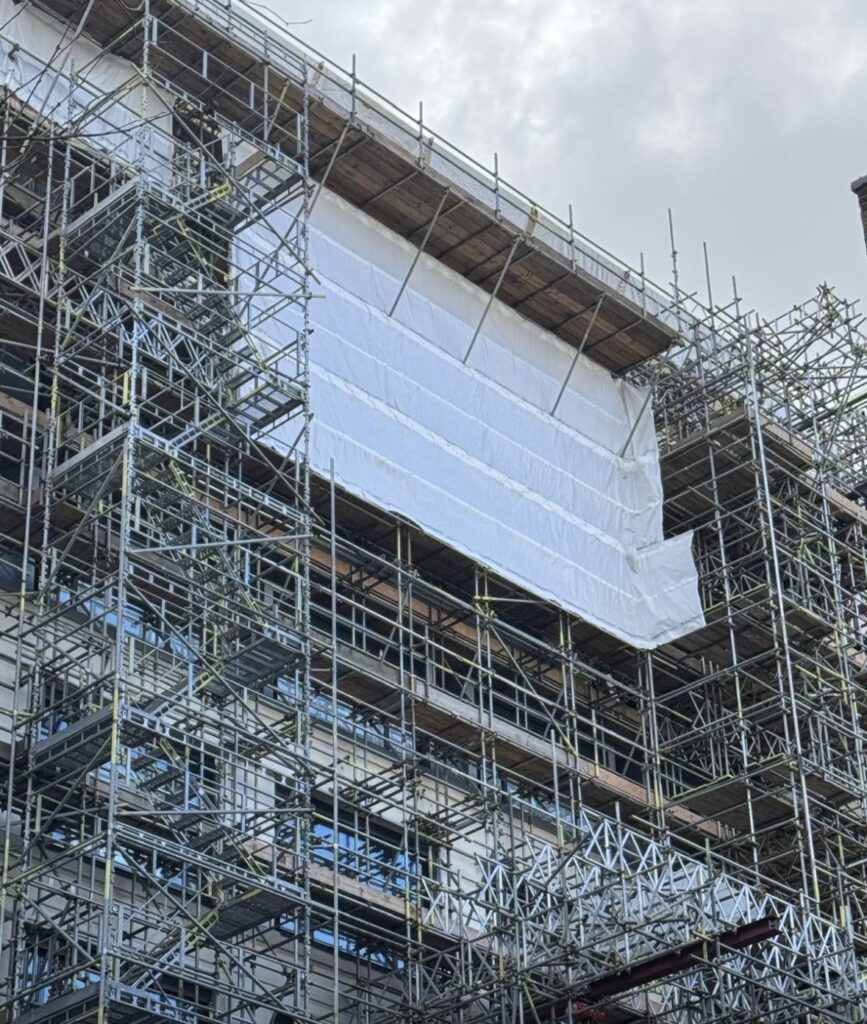
A compliant company considers pedestrian flow, visibility, lighting, and signage. They protect walkways, prevent trip hazards, and ensure debris cannot fall onto public areas. Where necessary, they install protective fans or hoardings.
They also coordinate with councils when licences are required and respect local conditions.
Public safety failures tend to attract fast enforcement and reputational damage.
Insurance and liability protection
Insurance isn’t just a formality. It’s a safety net if something goes wrong.
A compliant scaffolding company carries appropriate public liability insurance at levels required by councils and commercial clients. They can provide up-to-date certificates without hesitation.
Insurance protects you from third-party claims, property damage, and unforeseen incidents. If a company hesitates or provides outdated documentation, it’s a serious red flag.
Equipment quality and maintenance standards
Safe scaffolding relies on well-maintained equipment.
Boards should be sound and free from excessive damage. Tubes should be straight and structurally intact. Fittings should grip securely. Edge protection components should fit correctly.
Reputable companies inspect their stock regularly, retire damaged components, and avoid mixing incompatible systems.
Cheap operators often rely on worn or mismatched equipment that compromises structural integrity.
Communication and professionalism on site
Safety isn’t just technical. It’s behavioural.
Professional scaffolders communicate clearly with clients, other trades, and site managers. They explain access arrangements, working zones, and restrictions. They respond promptly to concerns or change requests.
A culture of professionalism usually reflects strong internal standards.
Digital compliance and modern reporting tools
In 2026, many scaffolding companies use digital systems for inspections, job tracking, photo evidence, and compliance records. This improves transparency and accountability.
Digital reporting allows faster response to defects and better audit trails if questions arise later.
It also improves coordination between teams and clients.
Comparing professional scaffolding companies to low-cost operators
Price differences in scaffolding often reflect underlying operational quality.
Professional firms invest in training, insurance, equipment maintenance, design capability, and compliance systems. Their overheads are higher, but risk is lower.
Low-cost operators often cut corners on documentation, inspections, insurance coverage, and workforce training. Short-term savings can turn into long-term problems if something goes wrong.
Choosing based solely on price increases risk exposure significantly.
How to assess a scaffolding company before booking
When speaking with scaffolders, listen for clarity and confidence rather than sales language.
A good company can explain how they manage safety, inspections, insurance, licences, and workforce competence without hesitation. They welcome sensible questions and provide documentation when requested.
If answers feel vague, rushed, or dismissive, trust your instincts.
Addressing common concerns people have about scaffolding safety
Many people worry about whether scaffolding will damage their property, block access, or create noise and disruption. A competent company manages these issues proactively and communicates expectations clearly.
Others worry about liability if someone is injured. Proper insurance and compliance reduce this risk significantly.
Some worry about how long scaffolding will remain in place. Clear scheduling and licence management prevent unnecessary overstay.
Final takeaway
A safe and compliant scaffolding company in 2026 is defined by planning quality, trained personnel, structured inspections, reliable insurance, disciplined equipment management, clear documentation, and professional site behaviour. Safety shows up in the details, not just in certificates.
When you choose a scaffold provider, you’re choosing how much risk you’re willing to accept. Cutting corners may save money upfront, but it increases exposure to delays, enforcement, liability, and reputational damage.
By asking the right questions, looking beyond price, and recognising the practical signs of competence, you protect your project, the people working at height, and the public around your site.
If something doesn’t feel right during the quoting or planning stage, it probably isn’t. A professional scaffolding company will always welcome scrutiny because strong compliance stands up to it.