Delivering safe access beneath an active jetty structure required a scaffold solution that could perform in a demanding marine environment while giving contractors and inspectors a stable platform for essential underside works.
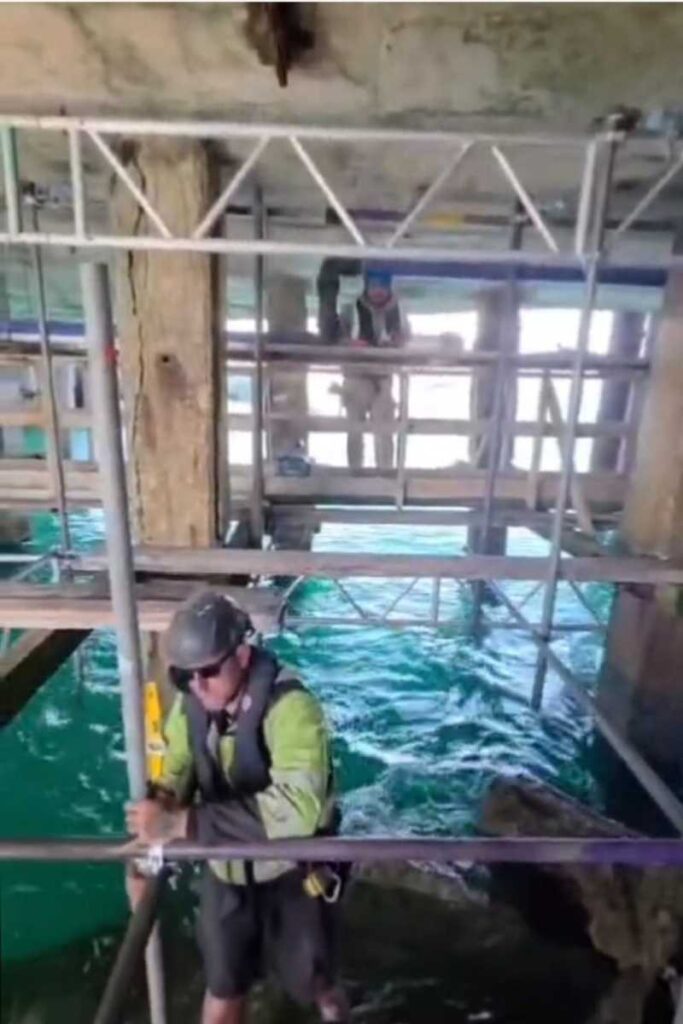
For this project, we installed a temporary suspended scaffold system beneath the Queen’s Berth jetty to support inspection, maintenance, and structural works to the underside of the deck.
With the scaffold positioned around 2.4 metres below the jetty soffit and extending across a substantial working area, the design needed to provide dependable load distribution, strong lateral stability, and safe access throughout the duration of the works.
Client Profile
This project was carried out at Queen’s Berth, where safe underside access was required beneath the jetty structure for inspection, maintenance, and structural works. The client needed a scaffold system that would create a secure and practical working environment below the deck while meeting the technical and safety demands of a marine setting.
Because the work area sat below the jetty and within an exposed coastal environment, the access solution had to account for structural loading, weather exposure, safe installation methods, and ongoing inspection requirements. The scaffold also needed to remain suitable for trades, inspectors, and maintenance personnel for the duration of the project.
Scope of Work
We supplied, installed, inspected, maintained, and later removed a suspended scaffold system beneath the Queen’s Berth jetty. The scaffold was designed as a temporary access platform suspended from the jetty structure above, creating a safe working area for the underside inspection and maintenance activities.
The works included:
- Site establishment and implementation of safety controls
- Delivery and staging of scaffold materials
- Installation of primary support columns and hangers
- Installation of ledgers and transoms to form the scaffold framework
- Installation of steel scaffold plank decking
- Installation of bracing and stability components
- Installation of edge protection and fall prevention measures
- Final scaffold inspection and certification
- Ongoing scaffold maintenance during the live works period
- Safe dismantling and removal on completion
The completed scaffold structure extended 24 metres in length and 7 metres in depth, with 10-metre scaffold returns on both the left and right sides. This created a broad underside access platform that allowed work to proceed across a significant section of the jetty structure.
Timeline & Team
The scaffold was planned and installed in carefully managed stages to ensure each part of the support system, framework, platform, and edge protection was completed safely and in the correct sequence. Because the project involved suspended access in a marine environment, the installation method was structured around progressive build stages, inspection points, and final handover.
The build process included site preparation, installation of primary hanger supports, assembly of the main scaffold framework, platform installation, and final inspection and certification. Once in service, the scaffold remained subject to regular maintenance and inspection to ensure continued safety and performance throughout the works period.
Key Challenges
This project involved a number of technical and environmental challenges that required a specialist suspended scaffold solution.
One of the most significant challenges was the location of the work itself. Access was required to the underside of a jetty structure, which ruled out standard ground-based scaffold methods and called for a suspended access platform fixed from the structure above.
The marine environment added further complexity. Exposure to coastal weather, wind, and moisture meant the scaffold had to use secure fixing methods and components suitable for marine conditions, while daily monitoring and ongoing inspections were essential to maintain safe use.
Structural stability was another major consideration. With the scaffold extending 24 metres in length, 7 metres in depth, and including 10-metre returns on both sides, the design had to ensure proper load transfer, lateral stability, and reliable support across the full working area.
There were also practical installation considerations. Materials had to be delivered, staged, and assembled in a controlled way, while exclusion zones, fall prevention measures, and permit systems had to be managed throughout the build and working period.
Our Solution
To meet the project requirements, we installed a suspended scaffold platform system supported directly from the jetty structure above. Vertical hanger tubes were fixed to the structural members of the jetty, with scaffold beams, ledgers, and transoms used to create a stable support arrangement beneath the deck.
The scaffold was positioned approximately 2.4 metres below the jetty soffit, giving trades and inspectors a practical working height for underside access. Steel scaffold planks were then installed to create a continuous working platform, while diagonal bracing was incorporated throughout the structure to improve lateral rigidity and maintain stability.
The design also included 10-metre returns on both the left and right sides, extending access across a wider section of the jetty underside. By combining suspended support, engineered load distribution, and a fully decked working platform, we created a scaffold system that was safe, stable, and fit for the demands of marine maintenance activity.
Health & Safety
Health and safety were central to every stage of this project, particularly because the scaffold was installed below a jetty in an exposed marine environment and at an elevated working location.
The scaffold was erected using certified scaffold components and installed by qualified scaffolders in accordance with recognised scaffolding standards and site-specific safety controls. Full edge protection, guardrails, and toe boards were fitted to exposed edges, while fall arrest systems were used by the scaffold erection team during installation.
Key safety controls included:
- Full edge protection and guardrails throughout exposed working areas
- Toe boards installed to reduce the risk of falling objects
- Fall arrest systems for the scaffold erection crew
- Daily scaffold inspections to maintain safe working condition
- Weather monitoring due to marine exposure
- Permit to work system for controlled access and activity
- Exclusion zones to protect surrounding areas during installation and use
All scaffold erection and management was carried out in accordance with:
- AS/NZS 1576 – Scaffolding
- AS/NZS 4576 – Guidelines for scaffolding
- Site-specific safety management plans
By combining engineered design with strict site controls, we were able to provide a suspended scaffold system that supported safe access beneath the jetty throughout the project.
The Outcome
Once completed, the scaffold system provided safe and reliable access to the underside of the Queen’s Berth jetty for inspection, maintenance, and structural works. The broad working platform gave trades and inspectors stable access across the required areas, helping the project move forward in a safer and more efficient way.
The project delivered:
- Safe access to the underside of the jetty structure
- Stable working platforms for inspectors and maintenance teams
- Compliance with engineering and scaffolding safety standards
- An efficient working environment for marine maintenance activity
- Ongoing safety through regular inspection and maintenance during use
By tailoring the scaffold design to the structural and environmental demands of the site, we created a dependable suspended access system that supported the works safely from installation through to project completion.
Project Summary
This project demonstrates our ability to deliver engineered suspended scaffold solutions for complex marine and structural maintenance works. By installing a temporary underside scaffold beneath the Queen’s Berth jetty, we provided safe access across a large working area, supported inspection and repair activity below the deck, and delivered a stable scaffold system designed to perform in an exposed coastal environment.