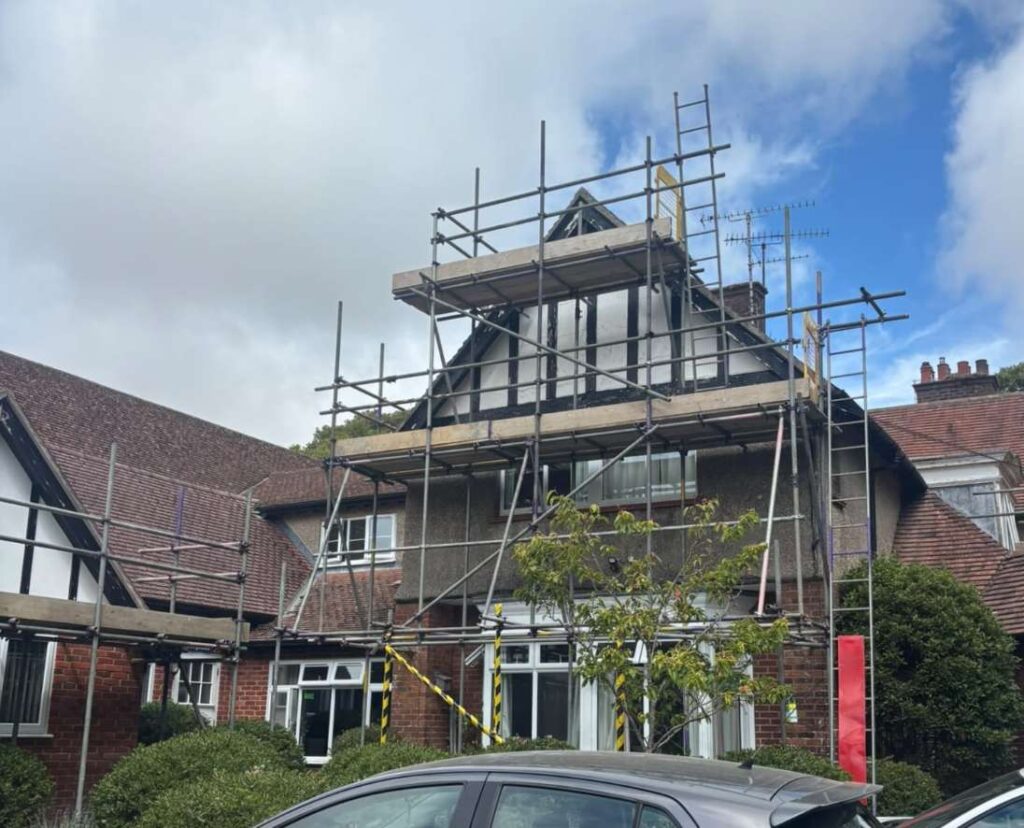
A mobile scaffold tower can provide efficient, adaptable access for short-duration work at height, particularly where a full scaffold is unnecessary or the work area changes regularly. That flexibility is valuable, but it also creates risks when a tower is treated as a lightweight substitute for proper planning, inspection and competent use.
Across more than 20 years of scaffolding work, we have seen towers used successfully for maintenance, fit-out, roofing details and industrial access. We have also seen how uneven ground, hurried alterations, overloaded platforms and poorly managed movement can turn a straightforward access solution into a serious hazard.
Safe tower work starts with an honest assessment of the task, site and people involved. The aim is not simply to get someone off the ground; it is to provide a stable working position that allows the job to be carried out safely, with suitable access, edge protection and room for materials.
Choose a Tower Only When It Suits the Work
A mobile tower is best suited to relatively light, short-term tasks where access is needed at one or several nearby positions. Typical examples include internal decorating, M&E installation, ceiling repairs, cladding checks, gutter maintenance and localised repairs where the ground is firm and the area can be controlled.
It is not automatically the right answer for every job at height. Repetitive movement over a long façade, substantial material loads, high wind exposure, difficult ground or work around public areas may point towards a fixed scaffold, a podium, a MEWP or another planned access system instead.
Before committing to a tower, establish the working height, duration, number of operatives, tools and materials required, available footprint and route for moving the unit. This early discussion prevents a common mistake: choosing a compact tower first, then trying to make the job fit its limitations.
For projects involving several trades or changing access needs, professionally planned safe access scaffolding for changing work can be the more practical and controlled option. A site assessment can establish this before delivery rather than after a problem develops.
Plan the Location and Assess the Ground
The condition beneath the tower matters as much as the tower itself. Castors and base components need a firm, level and clear surface capable of supporting the imposed load without sinking, rocking or shifting.
We assess more than whether a floor looks flat. Drain covers, service trenches, thresholds, slopes, loose paving, soft verges, temporary floor protection and changes between internal and external surfaces can all affect stability or make a tower unsafe to move.
Never level a tower by placing loose timber, blocks, bricks or other improvised packing beneath its wheels. If the surface cannot safely support the unit as specified by the manufacturer, relocate the work, improve the base properly or select a different access solution.
Allow enough room around the working area
The tower should not be positioned where doors can open into it, vehicle routes pass beside it, overhead services create a hazard, or members of the public can walk beneath the platform. Where work is near a circulation route, barriers, exclusion zones and clear site communication are essential.
External towers require an additional weather check. Wind can affect both stability and the ability of an operative to handle boards, panels or materials at height, while rain, frost and mud can make access components and the ground surface slippery.
Use the Correct Tower Configuration
Mobile towers must be assembled in accordance with the manufacturer’s instructions, using compatible components and the correct configuration for their intended height. Mixing parts from different tower systems, omitting braces or fitting substitute components is unsafe because the structure may not perform as designed.
The platform height, tower dimensions, stabilisers and any outriggers must be appropriate for the location. Manufacturer guidance will set out the permitted height-to-base ratio, the circumstances requiring stabilisers and whether a particular arrangement is suitable indoors or outdoors.
Guardrails, toe boards and safe access are not optional extras
A complete working platform should include the specified edge protection, while access should be through the intended internal ladder or stair arrangement. Climbing the outside of the frame or standing on a guardrail, box or loose board to gain extra reach is never acceptable.
Platform loading deserves the same attention. Check the tower’s load class and ensure the combined weight of people, tools and materials remains within the stated limit; bulky items can create an awkward handling risk even when their weight appears modest.
- Use only the specified platform boards and locking mechanisms.
- Fit stabilisers and outriggers exactly as required for the configuration.
- Keep the deck clear enough for secure footing and a safe escape route.
- Raise materials using a controlled method rather than carrying awkward loads while climbing.
- Do not bridge from the tower to a roof, window opening, neighbouring platform or structure.
Where an operative needs access across a larger area, repeatedly leaning, overreaching or creating makeshift bridges is a sign that the selected system is wrong for the task. A properly planned scaffold or walkway is often safer and more productive.
Competence Matters During Assembly and Use
Only people with suitable training, knowledge and practical competence should erect, alter, inspect or dismantle a mobile tower. Competence is not just familiarity with the appearance of a tower; it means understanding the manufacturer’s system, the safe assembly method, inspection points and site-specific risks.
Assembly should follow the prescribed sequence and an appropriate safe method, such as an approved advanced guardrail approach or collective protection method where applicable. The exact method depends on the tower system, so site teams should not assume that one manufacturer’s arrangement applies to another.
For a clear overview of the practical issues involved, our article on how a mobile scaffold tower is erected explains why component checks, bracing and access arrangements must be considered before anyone climbs the platform.
Brief everyone who will use the tower
Users need to know its permitted loading, safe access point, movement restrictions, inspection status and the limits of the platform. This is especially important where one contractor erects the unit and another trade uses it later in the day.
Inspect Before Use and After Any Change
A tower should be checked by a competent person after erection and before it is put into service. Regular inspection is also necessary while it remains in use, with the frequency and record-keeping requirements determined by the work activity, applicable regulations and site arrangements.
For construction work where there is a risk of a fall liable to cause personal injury, formal inspection requirements apply, including inspection following events likely to affect safety. Strong winds, impact from plant, unauthorised adjustment, relocation over uneven ground or a prolonged period out of use are all reasons to stop and reassess the tower.
A practical pre-use check should confirm that:
- the castors are locked and the tower is level;
- frames, braces, platforms and locks are correctly fitted and undamaged;
- guardrails and toe boards are complete at the working level;
- stabilisers or outriggers are securely positioned where required;
- access hatches close properly and there are no trip hazards on the deck;
- the inspection status is clear and no unauthorised alteration has occurred.
Do not use a tower that has a missing brace, bent frame, damaged wheel, incomplete platform or uncertain inspection history. Isolate it from use and arrange competent assessment; a quick visual workaround can hide a fault that affects the stability of the whole structure.
Move the Tower Only Under Controlled Conditions
The word “mobile” can be misleading. A tower is moved to reposition it between tasks, not while someone is working from the deck, carrying out an adjustment or relying on it as a travelling platform.
No person, material or unsecured tool should remain on the tower while it is being moved. Lower or remove loose items, check for overhead obstructions and confirm that the route is clear, level and suitable for the castors before releasing the wheel brakes.
Push from a safe, low-level position
Pulling or pushing from the platform, using a vehicle to move a tower, or forcing it over thresholds and uneven surfaces can overturn the structure or damage key components. Once in its new position, lock the castors, recheck level and stabilisation, then inspect the entire unit before re-entry.
Restricted industrial spaces may need a more permanent or specialist approach. Our work providing external tower access for silo maintenance illustrates why access routes, active operations, work interfaces and the structure itself should be considered together rather than in isolation.
Control Falling Objects and Site Interfaces
A safe platform protects the people standing on it, but work at height also creates risk for people below. Tools, fixings, offcuts and materials can fall through gaps or be knocked from the deck, particularly where the platform is overcrowded or operatives are handling items outside the guardrails.
Toe boards, good housekeeping and secure tool management all help reduce this risk. We also recommend establishing an exclusion zone below where practicable, especially in occupied premises, public-facing areas, warehouses and sites with vehicle movements.
Consider how the tower affects others working nearby. Roofers may need clear loading access, electricians may need service isolation, and facilities teams may need to preserve emergency routes, so a short daily coordination discussion can prevent unsafe clashes.
Understand the Limits of a Mobile Tower
A tower is not a universal solution for working at height. It may be unsuitable where work requires large quantities of materials, continuous access along an elevation, heavy-duty loading, substantial lateral force, complex roof-edge work or an extensive exclusion zone that disrupts the site.
It can also be inappropriate around fragile surfaces, poorly supported floors, high winds, live traffic routes, overhead electrical hazards or difficult changes in level. In these conditions, the safest decision may be to use a designed scaffold, modify the sequence of work or postpone the activity until suitable controls are in place.
We encourage clients and contractors to raise limitations early. A professional assessment should explain what is practical, what additional measures are needed and when another access system is the better option, rather than presenting a tower as a one-size-fits-all answer.
What We Get Asked…
Can a mobile scaffold tower be moved with someone on it?
No. The platform must be empty before the tower is repositioned, and loose tools or materials should be removed or secured. After movement, the castors must be locked and the tower checked again before use.
Do we need stabilisers on every tower?
Not necessarily, but many configurations require stabilisers or outriggers based on the tower height, base dimensions, indoor or outdoor setting and manufacturer instructions. Never make this decision by guesswork; follow the documentation for the specific system in use.
Can we use a tower on a slight slope?
A tower needs a stable, level base. Do not compensate for a slope with bricks, timber or improvised packing; seek competent advice and use an alternative arrangement if the surface cannot be made suitable in line with the manufacturer’s guidance.
How often should a mobile tower be inspected?
It should be checked before use and inspected by a competent person at appropriate intervals and after circumstances that could affect its safety. Formal requirements can vary with the work and risk, so the inspection regime should form part of the site’s work-at-height planning.
Our Final Thoughts
Working safely with a mobile scaffold tower depends on more than assembling the frames correctly. Selecting the right access method, assessing the ground, using trained people, controlling movement and maintaining inspections all contribute to a safer and more efficient job.
If you are unsure whether a tower is appropriate for your property, site or planned works, speak with an experienced scaffolding contractor before work begins. We can assess access constraints, loading, surrounding activities and working height to help you choose a practical solution that supports the job without compromising safety.