If you’re planning building work on your home, one of the first practical questions you’ll probably ask is how long the scaffolding will take to go up. It sounds simple, but the real answer depends on more than just the size of your house. Access, ground conditions, pavement licensing, weather, design complexity, and crew availability all play a part.
You might be organising roof repairs, window replacements, repointing, rendering, solar installation, or a loft conversion. In every case, scaffolding sets the pace for everything that follows. If it’s delayed, your entire project stalls. If it’s rushed or poorly installed, safety and compliance become a concern.
This guide breaks down what actually affects scaffold erection time in the UK, what realistic timeframes look like for different property types, how professional scaffolders plan installations, and how you can avoid delays. By the end, you’ll have a clear sense of what to expect and how to plan confidently.
What “erecting scaffolding” really involves
When people talk about putting up scaffolding, they often imagine a team arriving and building a metal frame around the house. In reality, erection includes several stages before the first tube even leaves the lorry.
A professional scaffolder will normally assess the site in advance. They’ll look at the frontage, access points, ground stability, building height, roof lines, obstructions, nearby traffic, and whether the scaffold needs to sit on the pavement. This informs how the scaffold is designed and what equipment is required.
On the day of installation, the crew unloads materials, establishes safe working zones, installs base plates and sole boards, erects standards and ledgers, fixes guardrails and toe boards, and ties the structure securely to the building. If the scaffold is public-facing, lighting and signage are added. A handover inspection confirms it’s safe for use.
So when you ask how long scaffolding takes to erect, you’re really asking how long it takes to plan, install, inspect, and make the structure ready for trades to work safely.
Why installation time varies so much between homes
No two houses present exactly the same conditions, even on the same street.
A detached house with clear access on all sides allows crews to move quickly and work efficiently. A terraced house with narrow pavements, parked cars, and overhead cables creates restrictions that slow everything down.
Ground conditions also matter. Soft ground may require extra support. Uneven paving may need levelling. Sloping driveways introduce additional stabilisation steps.
Building height and roof complexity affect the amount of material required and the number of lifts needed. Chimneys, dormers, conservatories, and extensions all add layers of complexity.
Local council requirements can also influence timing. If a pavement licence is needed, installation cannot legally start until approval is granted.
All of these factors shape how long erection realistically takes.
Typical scaffold erection times for common house types
While every job is unique, there are general benchmarks that help you plan.
Terraced houses
A simple front elevation scaffold for window replacement or repointing may take half a day to a full day, assuming good access and no pavement complications.
If the scaffold wraps around the rear or includes multiple lifts, installation may extend into a full day or slightly beyond.
Terraced properties often sit directly on the pavement, which may require a licence and additional safety measures that add preparation time.
Semi-detached houses
Semi-detached homes usually allow better access around at least one side. A full front and rear scaffold typically takes one full day with a standard crew.
If chimney access or roof edge protection is required, this may push installation closer to a day and a half.
Detached houses
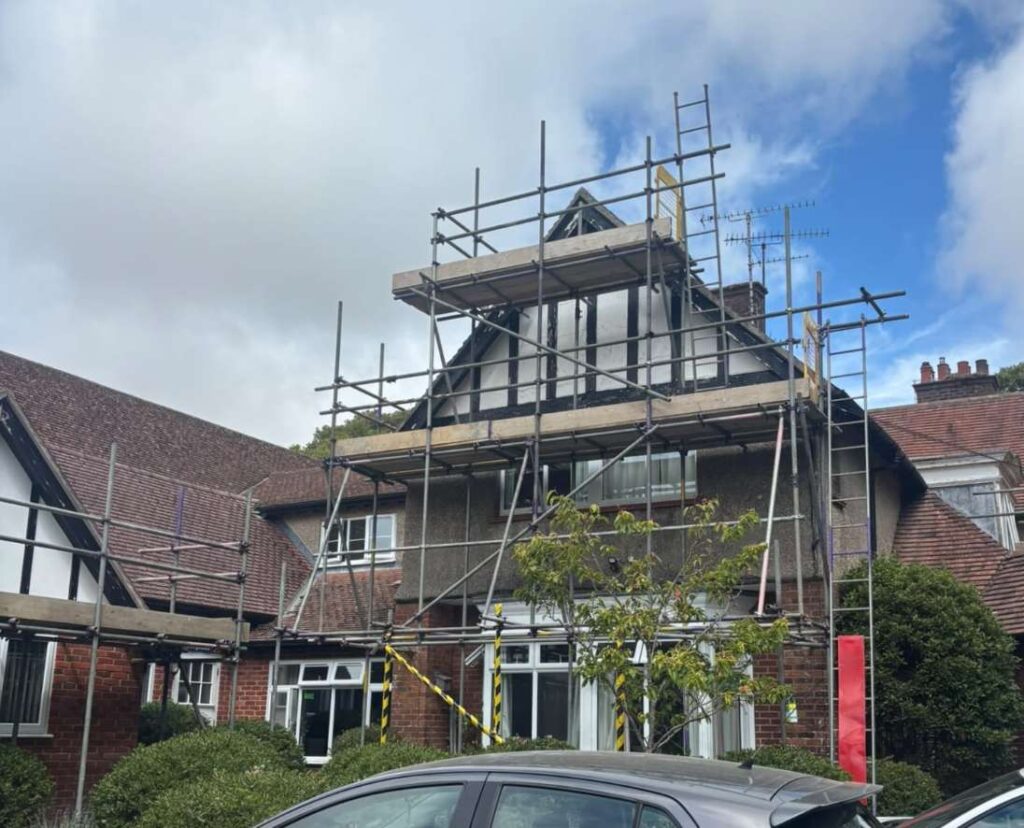
Detached properties often allow the fastest installation due to clear access and space for materials. A full perimeter scaffold may still take one to two days depending on height and complexity.
Large detached homes with multiple rooflines, conservatories, or sloping ground can take longer.
Bungalows
Single-storey scaffolding is usually quicker, often completed in a few hours to a half day unless complex access or large roof spans are involved.
Three-storey or townhouse properties
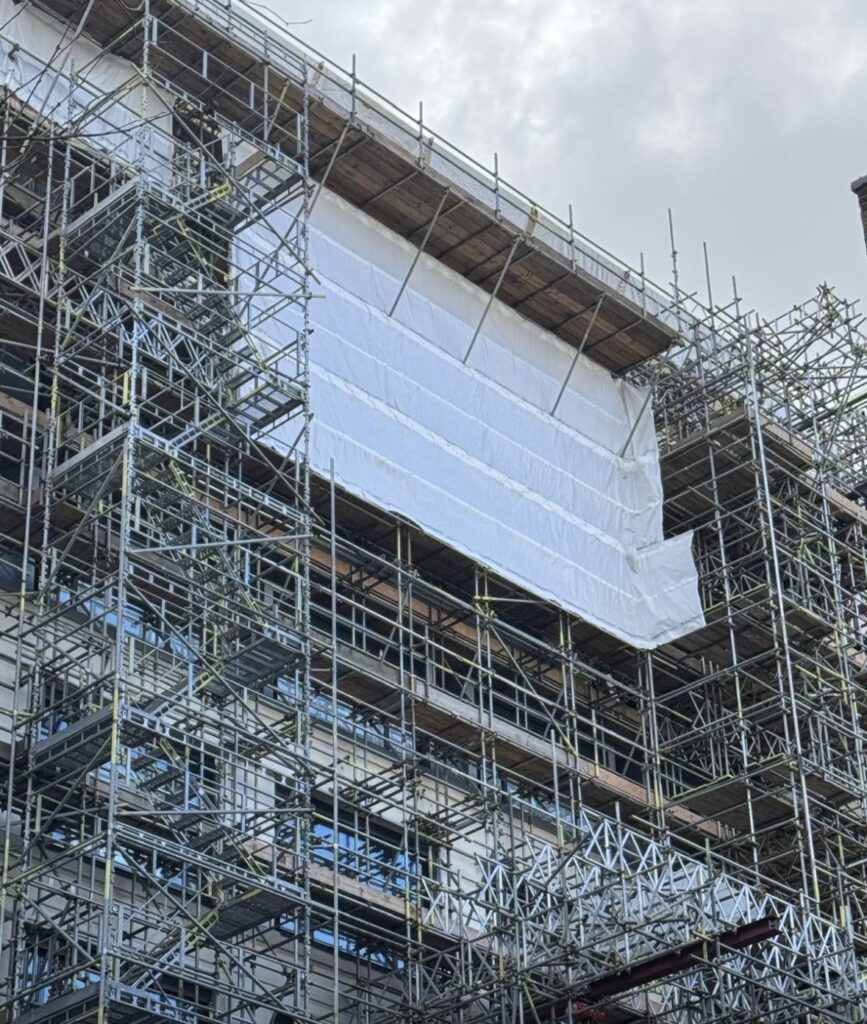
Tall properties require additional lifts, increased tying, and more safety controls. Installation often takes one to two full days.
These timeframes assume standard weather conditions and experienced crews.
How access affects erection speed
Access is one of the biggest drivers of installation time.
If scaffold materials can be unloaded close to the building and carried easily into position, crews work efficiently. If materials must be carried long distances due to parking restrictions, narrow alleys, or gated access, productivity drops significantly.
Rear access often creates challenges on terraced properties. Materials may need to be carried through the house, lifted over fences, or transported via narrow passageways.
Restricted access also increases handling risk, which slows work as crews prioritise safety.
Clear access reduces both installation time and labour cost.
The impact of pavement licences on scheduling
If any part of the scaffold will sit on the pavement or public highway, a pavement licence is usually required from the local council.
Approval times vary but commonly range from several days to two weeks. Installation cannot legally proceed until approval is granted.
Some councils impose additional conditions such as pedestrian walkway widths, lighting requirements, and installation windows, which can affect scheduling.
Professional scaffolders typically manage licence applications, but you should confirm this early to avoid surprises.
Licence delays are one of the most common causes of scaffold scheduling problems.
Weather conditions and seasonal impact
Weather affects scaffold erection more than most homeowners expect.
High winds can make lifting long tubes and boards unsafe. Heavy rain can create slippery surfaces and poor ground conditions. Frost and ice increase slip risk and slow working pace.
Winter daylight hours are shorter, which limits productive installation time. Summer heat can also reduce working speed for safety reasons.
While light rain rarely stops work entirely, sustained poor weather can delay installation by hours or days.
Planning flexibility helps mitigate this risk.
How crew size and experience influence timing
A well-organised crew works faster and safer than a larger but poorly coordinated team.
Experienced scaffolders anticipate challenges, handle materials efficiently, and maintain consistent erection standards. They communicate clearly and avoid rework.
Smaller domestic jobs often use two- or three-person crews. Larger structures may require four or more scaffolders.
The right crew size balances speed with safety and site constraints.
How scaffold design complexity affects erection time
Not all scaffolds are simple box structures.
Temporary roofs, cantilever sections, chimney access scaffolds, loading bays, and bridging sections require additional planning and installation time. These features may add several hours or an extra day to erection.
Design complexity increases the need for accuracy and inspection, which naturally extends timelines.
How inspections and handover fit into the schedule
Once the scaffold is erected, it must be inspected and formally handed over before use.
This inspection checks stability, guardrails, access ladders, tie placement, and general workmanship. It’s an essential safety step, not an optional extra.
On most domestic jobs, inspection occurs immediately after erection and adds minimal delay. On complex sites, additional checks may extend the handover slightly.
How long does dismantling take compared to erection?
Dismantling is often quicker than erection but still requires care.
A simple scaffold may be dismantled in a few hours. Larger structures may take a full day.
Access restrictions and weather affect dismantling similarly to erection.
How delays typically occur and how to avoid them
Most scaffold delays fall into predictable categories.
Late licence approvals delay start dates. Poor access planning slows material handling. Unexpected ground conditions require adjustments. Weather interruptions halt progress. Last-minute design changes require reconfiguration.
You can reduce risk by confirming licence requirements early, ensuring clear access on installation day, communicating site constraints honestly, and scheduling with contingency time.
How scaffold timing affects other trades
Scaffold erection sets the start line for roofing, brickwork, window installation, and other elevated trades.
If scaffolding is late, trades may reschedule or charge additional mobilisation costs. If scaffolding is rushed and unsafe, trades may refuse to work.
Clear scheduling coordination keeps projects flowing smoothly.
How long should scaffolding remain in place?
The scaffold remains in place for the duration of the works plus any buffer required for weather or inspections.
Many domestic scaffolds stay up for one to four weeks depending on scope. Larger projects may extend longer.
If scaffolding sits on the pavement, licence renewal may be required if work overruns.
How pricing links to erection time
Labour time directly influences cost. Longer installations require more labour hours, transport, and equipment handling.
Complexity, access restrictions, and licence conditions increase pricing accordingly.
Cheap quotes often assume unrealistically short installation times or minimal compliance, which creates risk later.
How to get an accurate timeframe from your scaffolder
When requesting a quote, ask the scaffolder how long they expect installation to take and what factors could influence timing.
A professional company will explain assumptions clearly and flag potential risks rather than giving vague assurances.
Photos of the site help scaffolders assess accurately.
How homeowner preparation can speed up installation
You can help the process by clearing access areas, moving vehicles, unlocking gates, securing pets, and notifying neighbours if access may be affected.
Removing garden furniture or obstacles reduces handling time.
Clear preparation improves efficiency and safety.
How noise and disruption factor into timing
Scaffold erection involves metal components, impact noise, and vehicle movements. Councils may impose restricted working hours in residential areas.
Shorter permitted working windows can extend overall installation duration.
How different regions of the UK affect timing
Urban areas often face tighter access restrictions and stricter licensing controls. Rural properties may have better access but longer travel times for crews.
Coastal and exposed locations may experience higher wind delays.
Local conditions matter.
How quality standards influence installation speed
High-quality installation prioritises accuracy, alignment, and safety. This may take slightly longer than rushed assembly but reduces long-term risk.
Professional scaffolders never sacrifice safety to save time.
Digital job management systems allow better coordination of crews, vehicles, and materials. This improves reliability and reduces delays.
Final takeaway
Erecting scaffolding for a house in the UK can take anywhere from a few hours to several days depending on access, design complexity, licensing requirements, weather, and crew experience. Simple domestic scaffolds often go up within a day, while larger or more restricted projects take longer.
The key to avoiding delays is early planning, clear communication, realistic scheduling, and choosing a professional scaffolding company that prioritises safety and compliance over speed alone.
By understanding what influences installation time and preparing properly, you can keep your project moving smoothly and avoid unnecessary disruption, cost, or risk.